
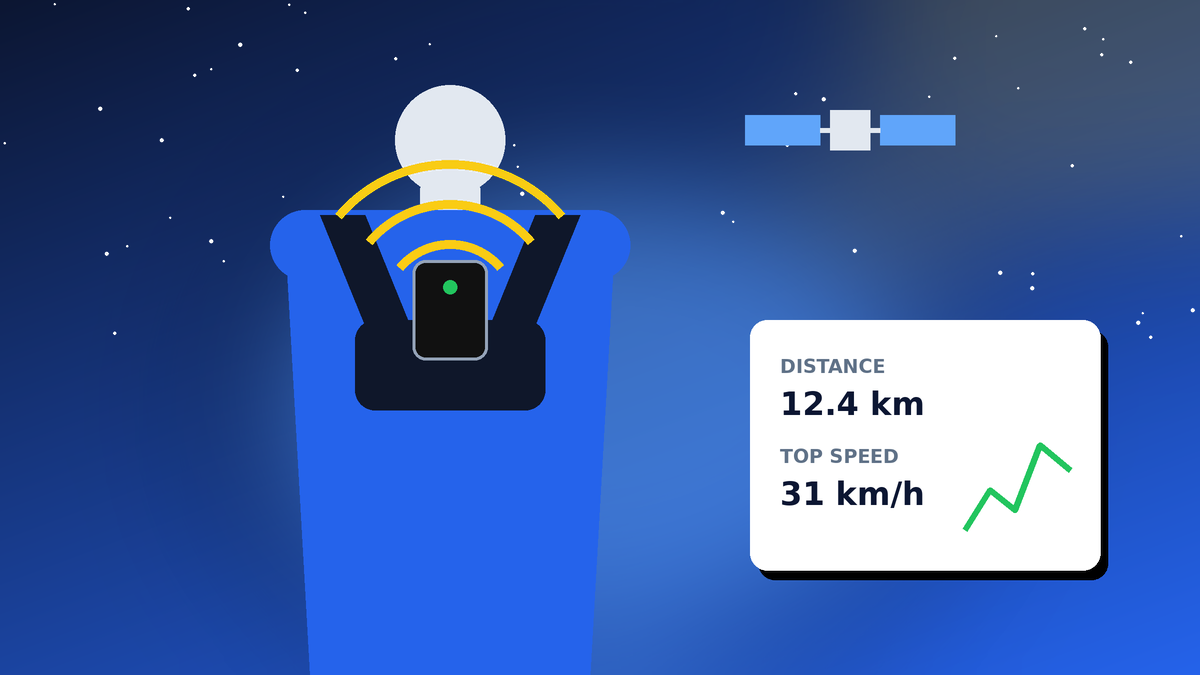
If you’ve watched India play recently, you may have spotted something odd: a small black bulge on the players’ upper backs, just below the collar. Fans on social media have asked if it’s a microphone, a heart monitor or even a cooling device.
It’s actually a GPS vest: a sports tracker that records how far players run, how fast they move and how much strain their bodies take. In this guide, I explain what the device is, what it measures, why it sits on the back and whether you can use something similar yourself.
Quick Take
In short:
- The black device is a GPS tracker worn in a snug vest under the jersey
- It sits between the shoulder blades, where it’s stable, protected and has a clear view of the sky
- It measures distance, speed, sprints, accelerations and workload
- Teams use the data to manage fitness and reduce injury risk, especially for fast bowlers
- Fitness watches give ordinary people a simpler version of the same idea
Device details checked against the manufacturer Catapult’s official product pages on 9 October 2026. The exact brand and setup used by any specific team may differ.
Table of Contents
What Is the Black Device Cricketers Wear?
The device is a wearable performance tracker, slipped into a pocket on a tight-fitting GPS vest. Players wear it under their jerseys during training and matches, which is why it shows up as a bump on their backs.
These trackers are made by specialist sports-tech companies such as Catapult and STATSports, and are used across football, rugby, hockey and cricket. Catapult’s cricket page lists clients including Cricket Australia, the England and New Zealand teams, and IPL franchises such as Mumbai Indians, Chennai Super Kings and Rajasthan Royals.
What Sensors Are Inside a GPS Vest?
Despite its small size, the tracker packs several sensors. According to Catapult’s published specifications for its Vector S7 outdoor tracker, it includes:
| Sensor | What it does |
|---|---|
| GNSS (GPS, GLONASS) | Tracks position, distance and speed using satellites, up to 10 times a second |
| Accelerometer | Measures every acceleration, deceleration and impact, sampled 1,000 times a second |
| Gyroscope | Measures rotation, such as a bowler’s body turning in delivery |
| Magnetometer | Works out direction and orientation |
| Heart rate support | Connects to a chest strap or uses an ECG-derived reading |
Together, these sensors build a detailed picture of every movement a player makes during a session.
What Does the Tracker Measure?
- Distance covered in a session or match
- Top speed and time spent sprinting
- Accelerations and decelerations, which put heavy strain on muscles
- Workload, a single number summarising how hard the body worked
- Bowling data: Catapult says its fast bowling algorithm automatically detects deliveries and measures load per ball
Coaches see this data on a laptop, tablet or phone, sometimes live during training.
Why Do Teams Use a GPS Vest?
Cricket schedules are packed, and injuries are costly. A GPS vest helps support staff make decisions based on data instead of guesswork:
- Managing fast bowlers: tracking how many deliveries a bowler sends down, and how intensely, helps avoid overuse injuries
- Planning training: coaches can make a session harder or lighter based on recent workload
- Return from injury: players can be brought back gradually, with their numbers compared to their normal levels
- Fitness benchmarks: running speed and repeat-sprint data show who’s in peak condition
Why Is It Worn Between the Shoulder Blades?
The upper back is the best spot on the body for this kind of tracker:
- Clear view of the sky for a good satellite signal
- Stable position: there’s little bounce compared with the waist or arms
- Close to the body’s centre, so movement readings reflect the whole body
- Out of the way of batting, bowling and fielding, and protected during dives
Is It Safe and Comfortable?
Yes. The GPS vest is made of light, stretchy fabric, and the tracker itself is small. Players get used to it quickly, and it’s worn under the jersey so it doesn’t affect play. The device only records movement data; it isn’t a microphone or camera.
Can You Use Something Similar?
Professional trackers are built for teams and aren’t priced for everyday users. But you can get many of the same insights from consumer gadgets:
- Smartwatches and fitness bands with GPS track distance, pace and heart rate
- Running apps on your phone log routes and speed
- Chest-strap heart rate monitors give more accurate heart data during workouts
Thinking about a fitness watch? Read our guide on whether smartwatches are worth buying in 2026.
Aadyanix Verdict: Small Device, Big Impact
That black bump is one of the most important pieces of kit in modern cricket. The GPS vest turns every sprint, dive and delivery into data, helping teams keep players fit and reduce injury risk over long seasons.
Next time you spot it on TV, you’ll know it’s not a microphone. It’s a tiny sports scientist riding on the player’s back.
GPS Vest: Frequently Asked Questions
What is the black thing on cricketers’ backs?
It’s a GPS performance tracker worn in a GPS vest under the jersey. It records distance, speed, accelerations and workload.
Is the device a microphone?
No. It records movement and position data. Broadcast microphones are separate, such as the ones built into the stumps.
Why is it important for fast bowlers?
Fast bowling puts heavy strain on the body. Trackers help support staff measure bowling workload and avoid overuse injuries.
Which companies make these trackers?
Leading makers include Catapult and STATSports. Teams choose based on their needs, and setups vary.
Can I buy a GPS vest for personal use?
Some consumer versions exist, but for most people a GPS smartwatch or fitness band is a more affordable way to track runs and workouts.
Have a question about sports tech? Get in touch and I’ll be happy to help.