
Disclosure: This article contains an affiliate link. If you buy through it, Aadyanix may earn a small commission at no extra cost to you. Read our Disclaimer.
Every year around Diwali, the air in Delhi-NCR and many other Indian cities turns hazy, and AQI apps start flashing red. Indoor air can be polluted too, so many families consider an air purifier. But with confusing terms like CADR, HEPA and PM2.5, choosing one isn’t easy.
This air purifier buying guide explains what actually matters, how to pick the right size for your room and which features are worth paying for, so you don’t waste money on marketing gimmicks.
Quick Take
In short:
- Look for a True HEPA filter (H13 is a good standard) to trap fine PM2.5 particles
- Match CADR to your room size; a bigger room needs a higher CADR
- Check filter replacement cost before you buy; it’s an ongoing expense
- Avoid ozone-generating ionisers
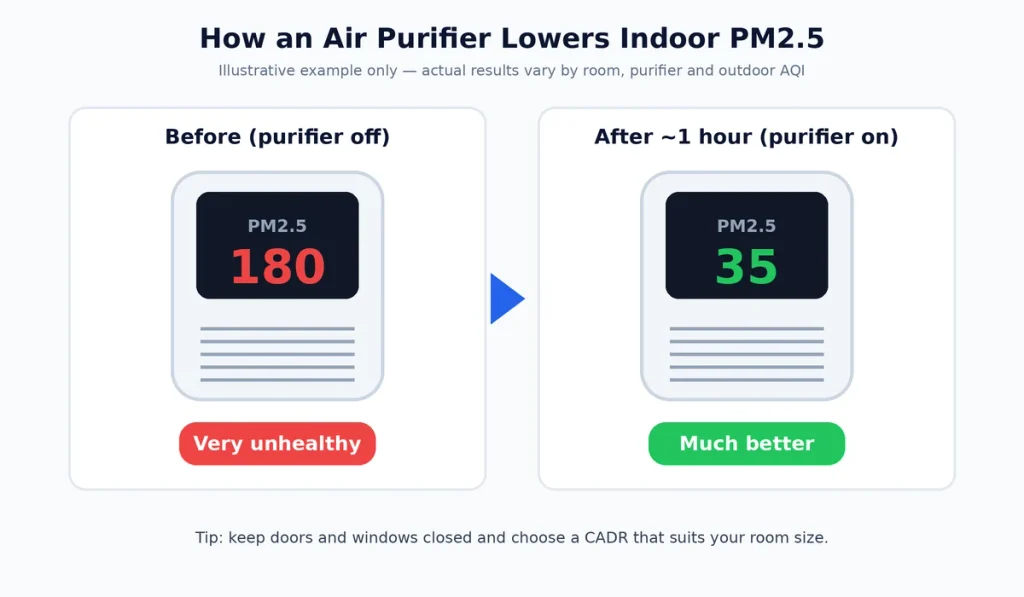
- Keep doors and windows closed while it runs, or it can’t keep up
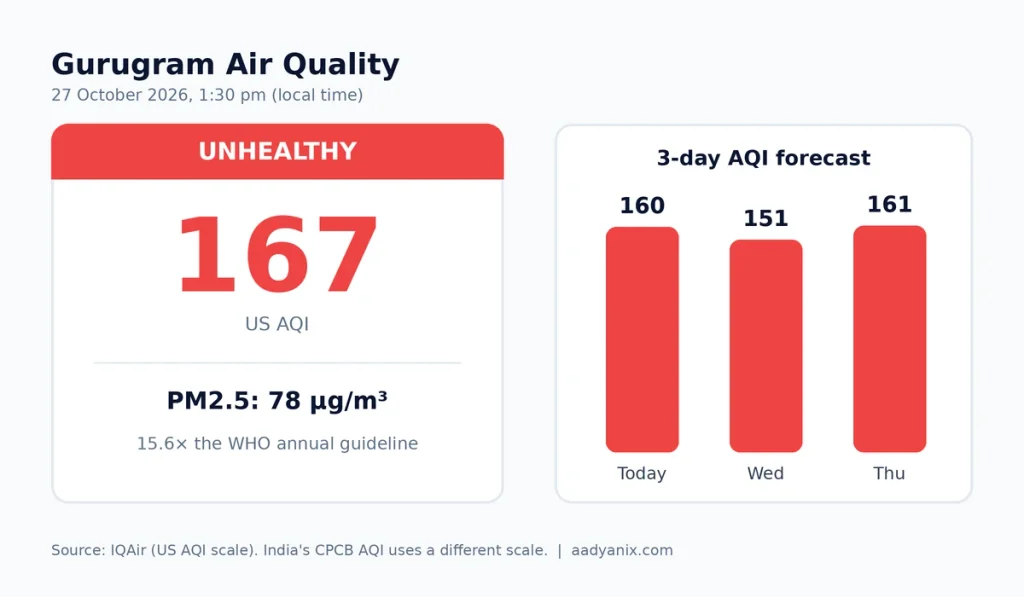
Table of Contents
Do You Really Need an Air Purifier?
India’s Central Pollution Control Board rates air quality on a scale where 0–50 is Good and 401–500 is Severe. When outdoor AQI is Poor (201–300) or worse, a good purifier can noticeably reduce fine particles indoors, especially in bedrooms where you spend many hours.
A purifier is most useful if you live in a city with high seasonal pollution, have children or elderly family members at home, or if anyone in your home is sensitive to dust or smoke. This air purifier buying guide focuses on room purifiers for homes.
| AQI | Category (CPCB) |
|---|---|
| 0–50 | Good |
| 51–100 | Satisfactory |
| 101–200 | Moderate |
| 201–300 | Poor |
| 301–400 | Very Poor |
| 401–500 | Severe |
1. Filter Type: Go for True HEPA
The first rule in this air purifier buying guide is the filter:
- True HEPA (H13 or higher): captures the vast majority of very fine particles, including PM2.5. This is the most important feature.
- Activated carbon filter: helps reduce smells, smoke and some gases. Useful during the firecracker season.
- Pre-filter: catches dust and hair, protecting the main filter. A washable pre-filter saves money.
Be wary of vague claims like “HEPA-type” or “HEPA-like”; they may not filter as well as True HEPA.
2. CADR: Match It to Your Room Size
CADR (Clean Air Delivery Rate) tells you how much clean air the purifier delivers, usually in cubic metres per hour (m³/h) or cubic feet per minute (CFM). A higher CADR cleans a room faster.
| Room size (approx.) | Suggested CADR |
|---|---|
| Up to 150 sq ft | 150–200 m³/h |
| 150–300 sq ft | 200–350 m³/h |
| 300–500 sq ft | 350–500 m³/h |
| Over 500 sq ft | 500+ m³/h, or two purifiers |
These are rough guidelines. If your city’s pollution is severe, choose a model rated for a slightly larger room than yours.
3. Running Costs: Filters and Power
The purifier’s price is only part of the cost. HEPA filters need replacing, often every 6–12 months depending on pollution and usage, and replacement filters can be expensive. Check the filter price and availability before buying.
Also check the power consumption; most purifiers use relatively little electricity, but you’ll run them for many hours a day in winter.
4. Noise Level
If the purifier is for a bedroom, look for a quiet sleep or night mode. Noise is usually listed in decibels (dB); lower is better. A purifier that’s too loud on high speed may end up running on low, which cleans the air much more slowly.
5. Smart Features: Nice to Have
- PM2.5 display or air quality sensor to see indoor air quality at a glance
- Auto mode that adjusts speed to the air quality
- App or Wi-Fi control to turn it on before you get home
- Filter replacement alerts
Our air purifier buying guide advice: these are helpful, but don’t pay much extra for smart features if the filter and CADR are weak.
What to Avoid
Every air purifier buying guide should warn you about these red flags:
- Ozone-generating ionisers: ozone can irritate the lungs
- No CADR or filter details on the box or website
- Very cheap unbranded models with no service support
- Expensive filters that are hard to find
Tips to Get the Most From Your Air Purifier
Following this air purifier buying guide is only half the job. Use your purifier well:
- Keep doors and windows closed while it runs
- Place it where air can flow freely, not tucked in a corner
- Run it continuously on bad-air days, not just for an hour
- Clean the pre-filter regularly and replace filters on time
- Close the room early in the evening, when pollution often rises
Aadyanix Verdict: Focus on HEPA, CADR and Filter Cost
The best advice in any air purifier buying guide is simple: choose a True HEPA purifier with a CADR suited to your room, and check the filter replacement cost before you buy. Everything else is a bonus.
With the right size and regular filter changes, a good purifier can make a real difference indoors during India’s pollution season.
Buying other gadgets this festive season? See our Diwali tech gifts under ₹5,000.
Air Purifier Buying Guide: Frequently Asked Questions
What should an air purifier buying guide cover?
The key points are filter type (True HEPA), CADR for your room size, filter replacement cost, noise level and avoiding ozone-generating ionisers.
Which filter is best in an air purifier?
A True HEPA filter, ideally H13 or higher, combined with an activated carbon filter for smells and smoke.
What CADR do I need for my bedroom?
For a typical 150–200 sq ft bedroom, a CADR of around 200–300 m³/h is a good starting point. Choose higher for severe pollution.
How often should I replace the HEPA filter?
Often every 6–12 months, depending on pollution levels and usage. Follow the manufacturer’s guidance and filter alerts.
Do air purifiers work with windows open?
Not well. Keep doors and windows closed so the purifier can clean the room’s air.
Are ioniser air purifiers safe?
Avoid models that produce ozone, which can irritate the lungs. Look for HEPA-based purifiers instead.
Need help choosing an air purifier? Get in touch and I’ll be happy to help.