
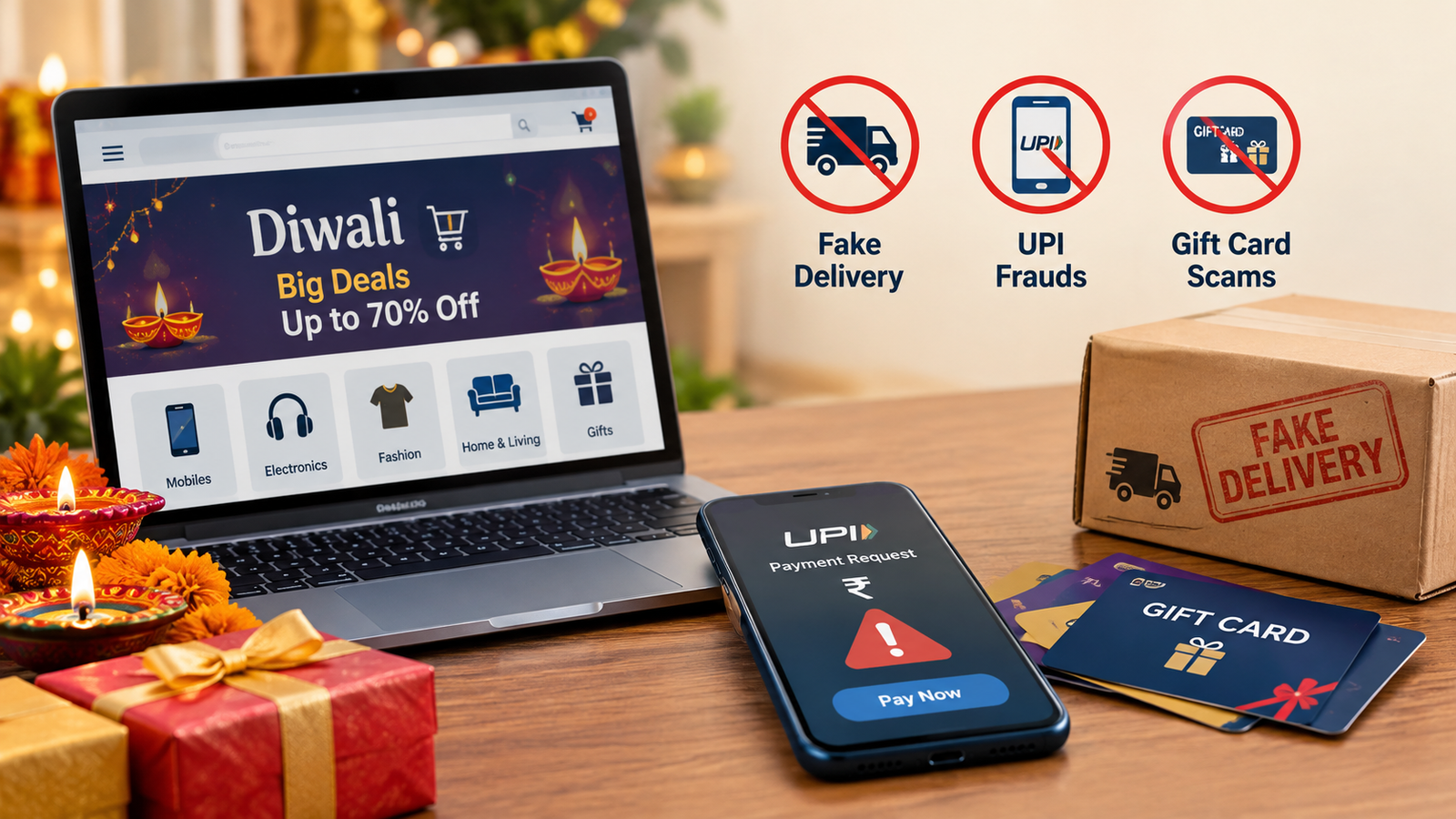
Festive sales, gift orders and bank offers make Diwali the busiest shopping season of the year in India. Unfortunately, it’s also peak season for fraudsters. Diwali Shopping Scams range from fake delivery messages to UPI tricks and too-good-to-be-true deals on WhatsApp.
In this guide, I explain the seven most common Diwali shopping scams, how to spot each one, a quick safety checklist before you pay, and exactly what to do if you’ve been cheated.
Quick Take
The golden rules:
- Never share an OTP, UPI PIN or card CVV with anyone, for any reason
- You never need your UPI PIN to receive money; only to send it
- Don’t click links in unexpected SMS, WhatsApp or email messages
- Shop only on official apps and websites you open yourself
- Scammed? Call the national cyber helpline 1930 or report at cybercrime.gov.in immediately
Table of Contents
Why Diwali Shopping Scams Spike Every Year
During the festive season, people order more parcels, chase limited-time deals and send money to family and friends. Fraudsters take advantage of this rush: a message about a “failed delivery” or a “₹5,000 Diwali cashback” seems believable when you’re expecting orders and offers.
Urgency is the main weapon behind most Diwali shopping scams. Almost every scam pushes you to act quickly, before you have time to think.
7 Common Diwali Shopping Scams and How to Spot Them
1. Fake Delivery and “Package on Hold” Messages
You get an SMS saying your parcel couldn’t be delivered because of an incomplete address, with a link to “update details” or pay a small re-delivery fee. The link leads to a fake page that steals your card details or installs harmful apps.
Spot it: courier companies don’t ask you to pay small fees through random links. Check delivery status only in the shopping app where you ordered.
2. UPI Payment Requests and QR Code Frauds
A “buyer” or “cashback agent” sends you a payment request or QR code and says you’ll receive money once you approve it. In reality, entering your UPI PIN sends money out of your account.
Spot it: you never need to scan a QR code or enter your UPI PIN to receive money. If anyone asks you to, it’s a scam.
3. Fake Sale Websites and Unbelievable Deals
Social media ads and websites offer branded phones or gadgets at 80–90% off. Some look almost identical to real shopping sites, with slightly different web addresses.
Spot it: check the web address carefully, avoid sites that only accept UPI or bank transfers, and compare the price with official stores. Our guide on how to spot real festive sale deals explains what genuine discounts look like.
4. Fake Gift Cards, Lucky Draws and Cashback
Messages claim you’ve won a Diwali lucky draw, a free gift hamper or a cashback reward, but you must pay a “processing fee” or share card details to claim it.
Spot it: real prizes never require you to pay first. If you didn’t enter a contest, you didn’t win one.
5. Fake Customer Care Numbers
When an order has a problem, people search online for customer care numbers. Scammers post fake numbers, then ask callers to install screen-sharing apps or share OTPs to process a “refund”.
Spot it: use only the help section inside the official app or website. Never install screen-sharing apps at a caller’s request.
6. WhatsApp “Diwali Offer” Links
Forwarded messages promise free recharges, festive bonuses or brand giveaways. The links collect personal details or spread to all your contacts.
Spot it: big brands don’t give away free gifts through forwarded WhatsApp messages. Don’t click, and don’t forward.
7. Fake Courier or Bank Calls Asking for OTPs
A caller claiming to be from a courier, bank or shopping site says there’s a problem with your order or account and asks for the OTP you just received.
Spot it: no genuine company will ever ask for your OTP. Hang up. Our guides on how to stop spam calls and AI voice clone scams explain how to protect yourself and your family.
Quick Safety Checklist Before You Pay
Run through this quick checklist to avoid Diwali shopping scams before every payment:
| Check | Safe sign |
|---|---|
| Where did you find the deal? | You opened the official app or typed the website address yourself |
| What payment method is required? | Cards, UPI or cash on delivery through the official checkout |
| Is anyone rushing you? | No countdown pressure from calls or messages |
| Are you asked for an OTP or PIN? | Only on your own banking or payment app, for a payment you started |
| Does the price look realistic? | Similar to official store prices |
For more ways to recognise fraud, read our guide on how to spot phishing scams.
What to Do If You Fall for One of These Diwali Shopping Scams
Act fast. The quicker you report, the better the chance of stopping the money.
- Call 1930, the national cyber crime helpline, or report online at cybercrime.gov.in
- Call your bank immediately to block your card, UPI or account
- Change passwords for your email, banking and shopping accounts
- Uninstall any app the scammer asked you to install
- Report fraud calls and messages on the government’s Sanchar Saathi portal (Chakshu)
- Keep evidence: screenshots, transaction IDs and phone numbers
Protect Elderly Family Members Too
Parents and grandparents are often targeted with Diwali shopping scams because they may be less familiar with digital payments. Before Diwali, take five minutes to remind them of the golden rules: never share OTPs or PINs, never click unknown links and always call you before paying anyone they don’t know.
Last Diwali, I sat with my parents and saved one simple rule as a note on their phones: “Never share OTP or PIN, and call me before paying anyone new.” It took five minutes and has already stopped them from replying to two suspicious messages.
Aadyanix Verdict: Slow Down, Then Pay
Most Diwali shopping scams work because they create urgency. If a message, call or deal pushes you to act immediately, stop and check through the official app or website. Never share OTPs, PINs or CVVs, and remember that you never need a PIN to receive money.
Shop smart, share this guide with your family, and enjoy a safe and happy Diwali.
Diwali Shopping Scams: Frequently Asked Questions
What is the cyber crime helpline number in India?
Call 1930, the national cyber crime helpline, or report online at cybercrime.gov.in.
What are the most common Diwali shopping scams?
Fake delivery messages, UPI payment request and QR code frauds, fake sale websites, fake lucky draws, fake customer care numbers, WhatsApp offer links and calls asking for OTPs.
Do I need my UPI PIN to receive money?
No. You only enter your UPI PIN to send money. Anyone asking you to enter it to receive money is a scammer.
How do I check if a delivery message is real?
Ignore links in the message. Open the official shopping app where you ordered and check the order status there.
Can I get my money back after a UPI scam?
Sometimes, if you report quickly. Call 1930 and your bank immediately, and file a complaint at cybercrime.gov.in.
How do I report scam calls and SMS?
You can report suspected fraud calls and messages on the Sanchar Saathi portal using the Chakshu facility.
Received a suspicious message? Get in touch and we’ll help you check it.