Few things beat a hot bath on a cold North Indian morning, and few things are more frustrating than a geyser that runs out of hot water halfway through, takes forever to heat or sends the electricity bill soaring. With so many sizes, types and star ratings, choosing the right one isn’t simple.
This geyser buying guide explains the difference between instant and storage geysers, what capacity your family needs, how star ratings affect your bill, which tank and safety features matter, and what to check before installation.
Quick Take
In short:
- Instant geysers (1–6 litres) suit kitchens and quick hand-washing
- Storage geysers (10–25 litres) suit bathrooms and bathing
- Pick a higher BEE star rating for lower running costs
- Hard water? Choose a good tank lining and a magnesium anode rod
- Safety first: ISI mark, thermostat, pressure valve, proper earthing and professional installation
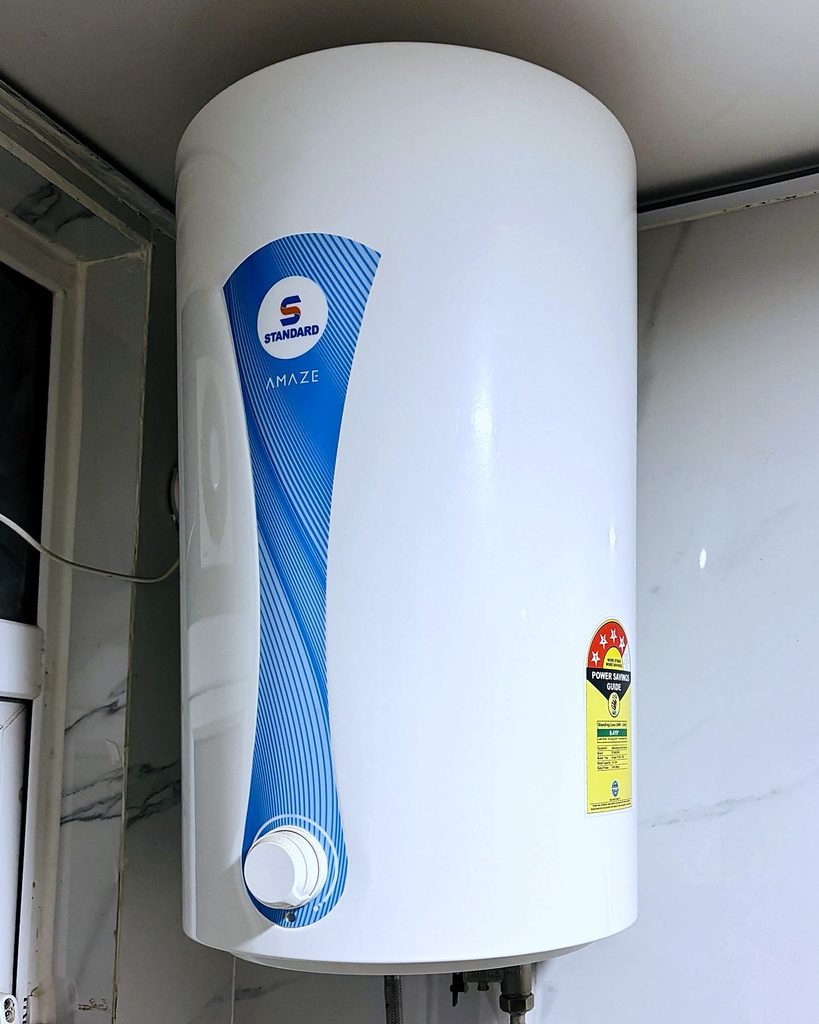
Table of Contents
Instant vs Storage Geyser: Which Type Do You Need?
| Instant geyser | Storage geyser | |
|---|---|---|
| Typical capacity | 1–6 litres | 10–25 litres or more |
| Typical power | Around 3,000W | Around 2,000W |
| Heating | Hot water in a minute or two, in small amounts | Heats a full tank; takes longer at first |
| Best for | Kitchens, washbasins, quick use | Bathrooms, bathing, families |
| Running cost | Low for short use | Depends on insulation and star rating |
For most homes, this geyser buying guide recommends a storage geyser for each bathroom and an instant geyser for the kitchen if you want hot water there.
What Capacity Do You Need?
Capacity is the most common mistake people make. Use this rough guide from our geyser buying guide:
| Use | Suggested capacity |
|---|---|
| Kitchen or washbasin | 1–6 litres (instant) |
| 1–2 people, bucket bath | 10–15 litres |
| 3–4 people | 15–25 litres |
| Large family or bathtub | 25 litres or more |
If family members bathe one after another in the morning, size up, because the tank needs time to reheat between uses.
Star Rating and Running Cost
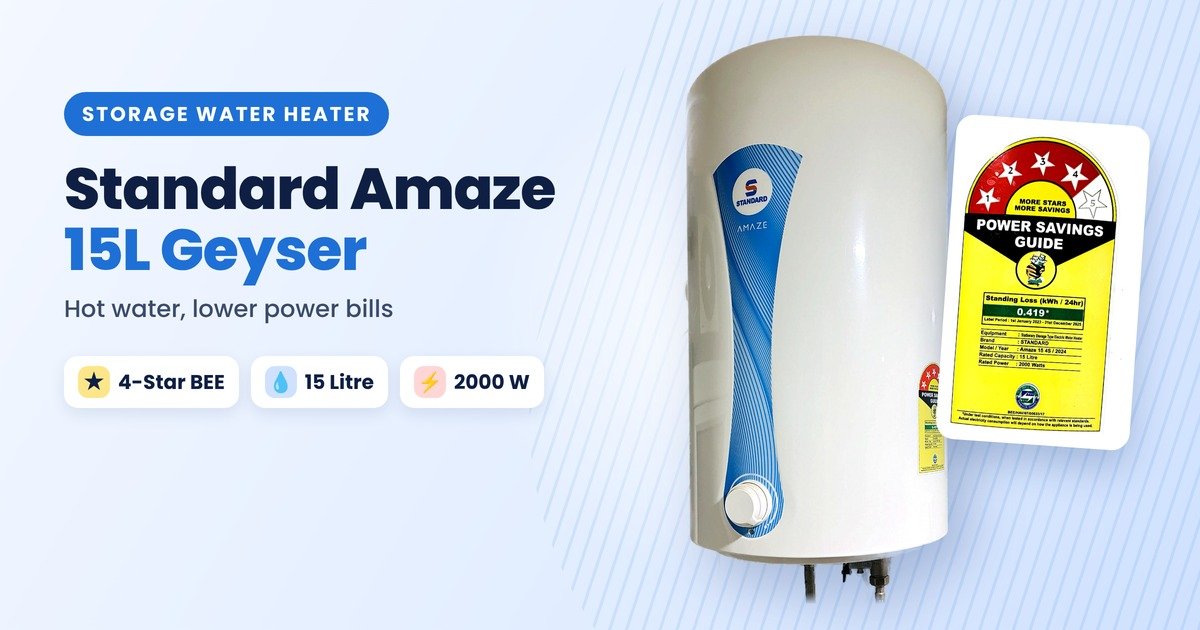
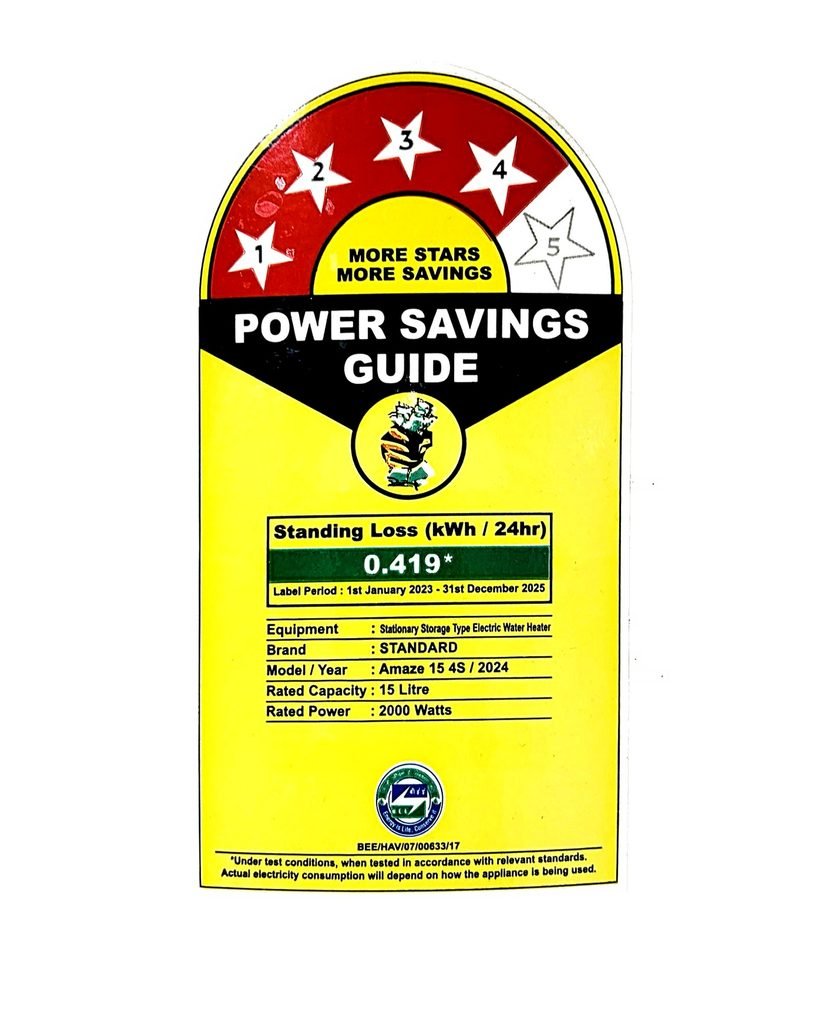
In India, electric storage water heaters carry a BEE star rating. A higher rating usually means better insulation, so the water stays hot longer and the geyser switches on less often. That saves electricity every day of winter.
You can estimate the cost of running a geyser with this formula:
Cost per hour = geyser wattage ÷ 1,000 × your electricity tariff (₹ per unit)
For example, a 2,000W storage geyser at an illustrative ₹8 per unit costs about ₹16 for every hour its heating element is actually on. A well-insulated, higher-rated geyser stays hot longer, so its element switches on less often.
Tank Material and Hard Water
Tank quality is an often-ignored part of a geyser buying guide. Many parts of India, including Delhi-NCR, have hard water that leaves scale inside geysers and shortens their life. Look at:
- Tank lining: glass-lined or vitreous enamel tanks resist corrosion well; good stainless steel tanks are also durable
- Anode rod: a magnesium anode rod protects the tank from corrosion; it wears out and should be checked and replaced during servicing
- Heating element: look for elements designed to resist scaling, such as glass-coated or incoloy elements
- Warranty: check the separate warranty on the tank and the heating element
Safety Features to Look For
Safety is the most important part of any geyser buying guide:
- ISI mark (BIS certification)
- Thermostat to control the water temperature
- Thermal cut-off that switches off power if the water overheats
- Pressure release or multi-function valve to prevent excess pressure in the tank
- Shock protection and a proper earthing connection
Avoid very cheap, unbranded geysers with no clear safety features or service support.
Installation Tips
- Use a qualified electrician or the brand’s installer
- Make sure the circuit is properly earthed, and ideally protected by an RCCB/ELCB
- Use a heavy-duty socket and wiring rated for the geyser’s load
- Choose vertical or horizontal models to fit your bathroom space, especially for low ceilings or lofts
- Keep the geyser away from direct water splashes
Many families also make a habit of switching the geyser off before bathing. It’s a sensible extra precaution, especially in older homes where the wiring or earthing may not be perfect.
We use a 15-litre storage geyser for a family of three, and it’s enough for everyone’s morning bath as long as we leave a few minutes between turns for it to reheat.
What About Gas, Solar and Heat Pump Water Heaters?
- Gas geysers can heat water quickly without much electricity, but they must be installed outside the bathroom in a well-ventilated area. Using one inside a closed bathroom can cause carbon monoxide poisoning, which can be fatal.
- Solar water heaters cut electricity costs over time and suit independent houses with roof space and good sunlight.
- Heat pump water heaters are very efficient but cost more upfront.
Maintenance: Make Your Geyser Last Longer
The last step in this geyser buying guide happens after you buy:
- Get it serviced once a year, ideally before winter
- Check and replace the anode rod when needed
- Descale the tank and element in hard-water areas
- Set the thermostat to a moderate temperature instead of the maximum
- Watch for warning signs: leaks, strange noises, rusty water or tripping switches
Keeping the rest of your home warm too? Read our room heater buying guide.
Aadyanix Verdict: Right Size, Right Rating, Right Installation
The key to this geyser buying guide is simple: choose the right type and capacity for how your family uses hot water, pick a higher BEE star rating to save electricity, and protect the tank if you have hard water. Then make sure it’s installed with proper earthing by a qualified professional.
A good geyser, well installed and serviced every year, should keep your family comfortable for many winters.
Geyser Buying Guide: Frequently Asked Questions
What should a geyser buying guide cover?
The key points are type (instant or storage), capacity, BEE star rating, tank material, safety features and proper installation.
Which geyser capacity is best for a family of four?
A 15–25 litre storage geyser usually suits a family of three to four people. Choose the larger size if everyone bathes one after another.
Is an instant geyser good for bathing?
Instant geysers have small capacities, so they’re better for kitchens and washbasins. For bathing, a storage geyser is usually more practical.
Does a higher star rating really save electricity?
Yes. Higher-rated storage geysers usually have better insulation, so water stays hot longer and the heater switches on less often.
How often should a geyser be serviced?
Once a year is a good habit, especially in hard-water areas. Servicing should include checking the anode rod and descaling.
Is it safe to install a gas geyser inside the bathroom?
No. Gas geysers must be installed outside the bathroom in a well-ventilated area to avoid carbon monoxide poisoning.
Need help choosing a geyser? Get in touch and I’ll be happy to help.