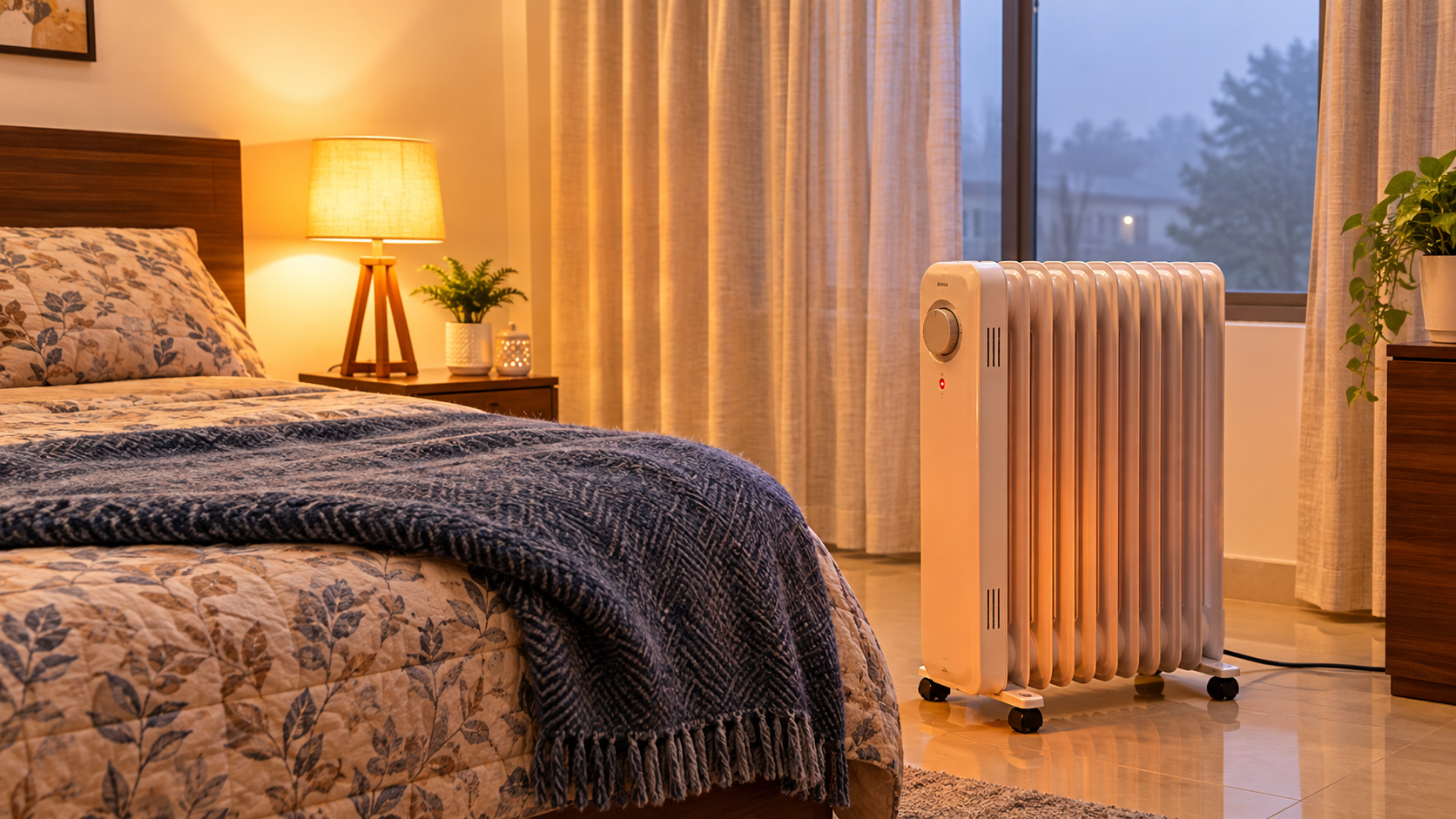
Winter mornings and nights in North India can be bitterly cold, and most homes aren’t built with central heating. A room heater makes a huge difference, but the wrong one can dry the air, push up your electricity bill or even become a safety risk.
This room heater buying guide explains the main types of heaters, how much wattage your room needs, what it costs to run one and the safety features that matter most, especially if you have children or elderly family members at home.
Quick Take
In short:
- Oil-filled radiators are the safest and most comfortable for bedrooms and overnight use
- Fan heaters warm a small room quickly and cost less
- Halogen and carbon heaters warm the person in front of them, not the whole room
- Look for the ISI mark, tip-over protection and overheat protection
- Never use a coal or charcoal angithi in a closed room; it can cause deadly carbon monoxide poisoning
Table of Contents
Types of Room Heaters Compared
| Type | How it heats | Best for | Watch out for |
|---|---|---|---|
| Oil-filled radiator | Heats oil inside fins that warm the room gently | Bedrooms, overnight use, babies and elderly | Takes time to warm up; heavier |
| Fan heater | Blows air over a heating element | Quick heat in small rooms | Noise; can dry the air |
| Halogen heater | Glowing halogen tubes radiate heat | Warming one person sitting nearby | Bright light; dries air; hot surface |
| Carbon or infrared heater | Infrared radiation warms people and objects directly | Spot heating, outdoor-facing rooms | Doesn’t warm the whole room evenly |
| Convector heater | Warms air that rises and circulates | Medium rooms, steady heat | Slower than fan heaters |
For most Indian homes, this room heater buying guide recommends an oil-filled radiator for bedrooms and a fan heater for quick warmth in a small study or bathroom-side room.
What Wattage Do You Need?
Wattage is the next step in this room heater buying guide. Most room heaters in India range from about 800W to 2,500W. A rough rule of thumb is around 10 watts per square foot for a typical room:
| Room size (approx.) | Suggested heater power |
|---|---|
| Up to 100 sq ft | 800W–1,000W |
| 100–150 sq ft | 1,000W–1,500W |
| 150–250 sq ft | 1,500W–2,500W |
Choose a heater with adjustable power settings and a thermostat, so it doesn’t run at full power all the time. Rooms with poor insulation, high ceilings or large windows may need more heat.
How Much Does It Cost to Run a Room Heater?
Running cost is often missing from a room heater buying guide, but it matters all winter:
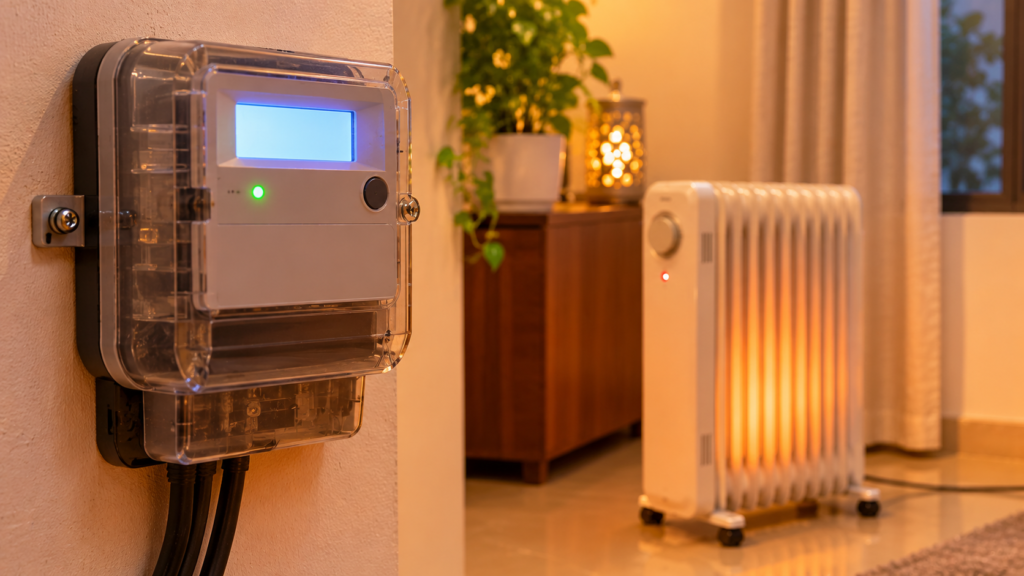
Cost per hour = heater wattage ÷ 1,000 × your electricity tariff (₹ per unit)
For example, a 2,000W heater at an illustrative ₹8 per unit costs about ₹16 per hour at full power. Run it for 5 hours a night for 30 days, and that’s about ₹2,400 a month.
Thermostats cut this significantly, because the heater switches off once the room is warm. Oil-filled radiators also keep radiating heat for a while after their element switches off.
Safety Features That Matter Most
Safety is the most important part of any room heater buying guide:
- ISI mark (BIS certification): buy heaters that meet Indian safety standards
- Tip-over protection: switches the heater off if it falls over
- Overheat protection: cuts power if the heater gets too hot
- Thermostat: keeps the temperature steady and saves electricity
- Cool-touch body or safety grille: important with children and pets
- Sturdy plug and cable: heaters draw a lot of power
Room Heater Safety Rules for Indian Homes
No room heater buying guide is complete without these rules:
- Plug directly into a wall socket rated for the load, not an extension board or multi-plug
- Keep at least 3 feet between the heater and curtains, bedding, clothes and furniture
- Don’t leave fan or halogen heaters on overnight or when you leave the room
- Never dry clothes on or near a heater
- Keep a little ventilation and a bowl of water nearby, as some heaters dry the air
- Never use a coal, charcoal or wood angithi indoors in a closed room. It produces carbon monoxide, an invisible, odourless gas that can be fatal
If anyone feels dizzy, drowsy or gets a headache near a fuel-burning heater, move them to fresh air immediately and seek medical help.
Best Heater for Babies and Elderly Family Members
An oil-filled radiator is usually the safest choice: it heats gently, doesn’t glow, doesn’t burn oxygen and has no exposed elements. Place it away from the bed and play area, use the thermostat, and check that the room doesn’t get too hot or dry.
In our daughter’s room, we use an oil-filled radiator on a low setting with the thermostat on. It has no glowing parts or exposed elements, and it keeps the room evenly warm without making the air too dry.
Tips to Save Electricity This Winter
- Close doors and windows, and use thick curtains at night
- Heat only the room you’re using
- Use the thermostat and lower power settings once the room is warm
- Turn the heater off 15–20 minutes before you leave the room; an oil-filled radiator stays warm
- Wear warm clothes indoors and use a good blanket instead of overheating the room
Also worried about winter air quality? Read our air purifier buying guide.
Aadyanix Verdict: Choose Safety First, Then Speed
The best advice in this room heater buying guide: choose an ISI-marked oil-filled radiator with a thermostat for bedrooms and overnight use, and a fan heater only for quick warmth in small rooms. Match the wattage to your room, and never compromise on tip-over and overheat protection.
Above all, never use a coal or charcoal angithi in a closed room. Stay warm and stay safe this winter.
Room Heater Buying Guide: Frequently Asked Questions
What should I check in a room heater buying guide?
Check the heater type, wattage for your room size, running cost, ISI mark, thermostat, and tip-over and overheat protection.
Which room heater is best for a bedroom?
An oil-filled radiator with a thermostat is usually the safest and most comfortable choice for bedrooms and overnight use.
Which heater consumes the least electricity?
It depends more on wattage and usage than type. A heater with a thermostat and lower power settings saves the most electricity.
Is it safe to sleep with a room heater on?
Fan and halogen heaters shouldn’t be left on overnight. An oil-filled radiator with a thermostat, safety features and good placement is the safer option.
Do room heaters dry the air?
Fan and halogen heaters can. Keep some ventilation and a bowl of water in the room, or use an oil-filled radiator.
Why is a coal angithi dangerous indoors?
Burning coal or charcoal in a closed room produces carbon monoxide, an odourless gas that can cause poisoning and death.
Need help choosing a heater? Get in touch and I’ll be happy to help.