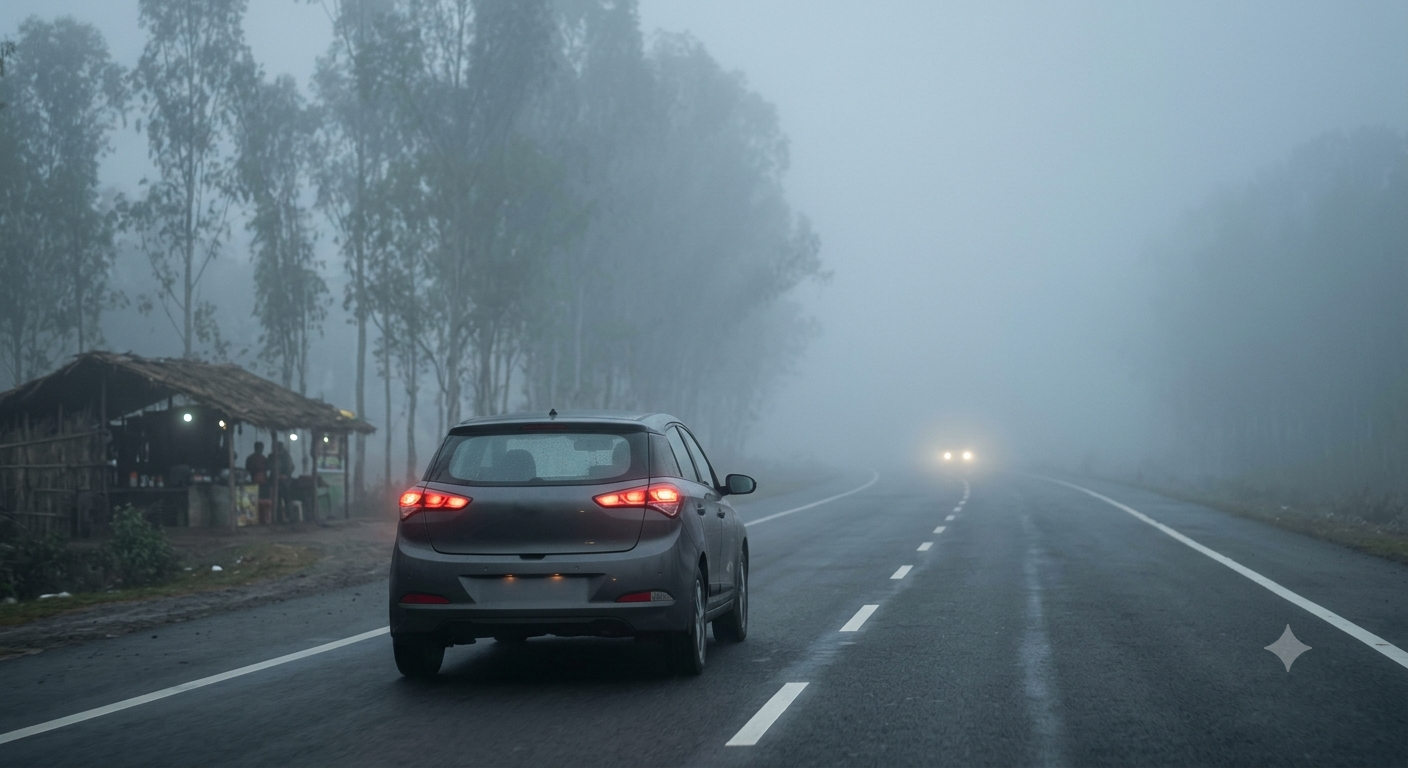
Every winter, thick fog rolls across North India, from Delhi-NCR and Punjab to Uttar Pradesh and Bihar. Visibility can drop to a few metres within minutes, turning a routine drive into one of the most dangerous situations on Indian roads. These driving in fog tips will help you stay safe, whether you’re commuting in Gurugram or driving on an expressway at dawn.
I’ve put together 10 practical driving in fog tips, covering lights, speed, visibility and what to do if you have to stop, plus a quick checklist to prepare your car before fog season.
Quick Take
The essentials:
- Use low beam and fog lamps, never high beam
- Slow down and keep a much bigger gap
- Follow the left edge line, not the tail lights ahead
- Don’t use hazard lights while moving; use them only when stopped
- If visibility is very poor, delay your trip or wait for the fog to lift
Table of Contents
Why Fog Is So Dangerous
Before we get to the driving in fog tips, it helps to understand the risk. Fog doesn’t just reduce how far you can see; it also makes it hard to judge distance and speed. Vehicles ahead seem to appear out of nowhere, and many drivers keep going at normal speed. That’s why chain collisions involving several vehicles are a recurring winter problem on North Indian highways.
10 Driving in Fog Tips for Indian Roads
1. Use Low Beam, Never High Beam
It feels natural to switch to high beam when you can’t see, but in fog the light bounces off water droplets and creates a white glare. Low beam points the light down onto the road, where it’s most useful.
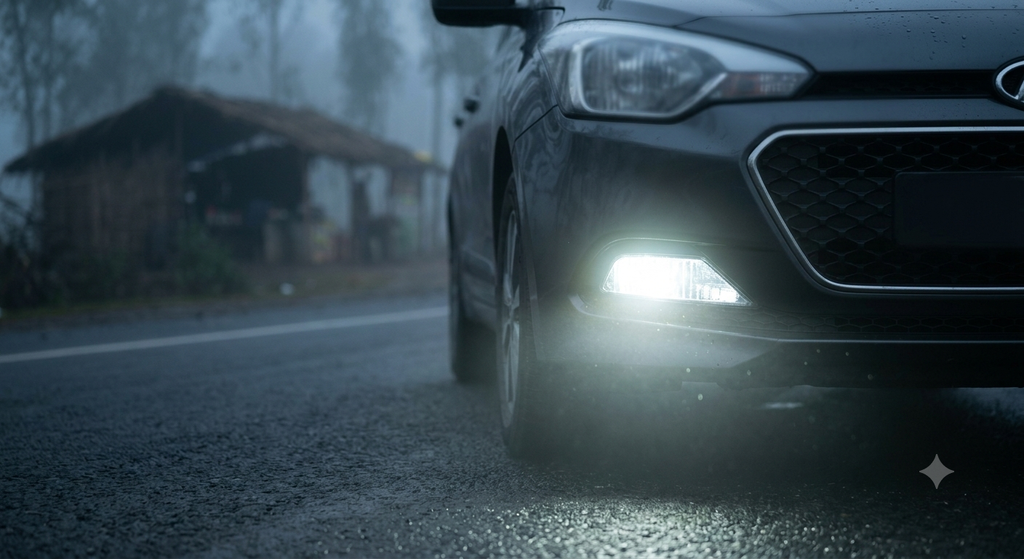
2. Turn On Your Fog Lamps
Front fog lamps sit low and throw a wide beam under the fog. If your car has a rear fog lamp, turn it on too; it makes you much more visible to vehicles behind. Switch it off once the fog clears, as it can dazzle other drivers.
3. Slow Down More Than You Think
Drive at a speed that lets you stop within the distance you can see. If you can only see 20 metres ahead, you must be able to stop within 20 metres.
4. Keep a Big Gap
Leave far more space than usual between you and the vehicle ahead. If it brakes suddenly, you’ll need the extra time and distance.
5. Follow the Left Edge Line
Use the left edge line of the road as your guide. Following the tail lights of the vehicle ahead can be risky, because it may drift, stop or leave the road.
6. Don’t Use Hazard Lights While Moving
Hazard lights on a moving car can confuse other drivers, who may think you’ve stopped and can’t see your indicators. Use your low beam and fog lamps while driving, and switch on hazard lights only if you’ve stopped.
7. Keep Your Windscreen Clear
Fog makes windows mist up quickly. Use the AC with fresh air (not recirculation) and the front demister, and switch on the rear demister. Make sure wipers and washer fluid work well.
8. Avoid Overtaking and Lane Changes
Overtaking in fog is extremely risky, because you can’t see oncoming traffic. Stay in your lane and be patient.
9. Reduce Distractions and Listen
Turn the music down and keep your phone away. Lowering a window slightly can help you hear horns and traffic you can’t yet see.
10. If You Must Stop, Get Completely Off the Road
Never stop on the carriageway. If you must stop, pull well off the road, as far left as safely possible, switch on hazard lights and stay away from traffic. On expressways, use designated stopping areas or exits where possible.
Prepare Your Car Before Fog Season
Good preparation makes these driving in fog tips far more effective:
| Check | Why it matters |
|---|---|
| Headlights and fog lamps | Clean lenses and working bulbs help you see and be seen |
| Wipers and washer fluid | Fog leaves grime on the windscreen |
| Demisters and AC | Keep windows clear |
| Rear reflectors and tail lights | Help vehicles behind you spot you early |
| Tyres and brakes | You may need to stop suddenly |
For a complete check, follow our car checklist before a road trip.
When You Should Not Drive at All
- Visibility is so poor you can barely see the road edge
- You’re tired, especially on early-morning or late-night drives
- Weather alerts warn of dense fog on your route
- The trip isn’t urgent and can wait until the fog lifts later in the morning
One of the most overlooked driving in fog tips: check fog alerts and traffic updates before you leave. Delaying a trip by an hour or two is always better than taking a risk.
I once followed a truck’s tail lights through thick fog, until it suddenly stopped on the highway. Since then, I always follow the left edge line instead, and keep a much bigger gap.
Tips for EV and Automatic Car Drivers
- EVs: heaters and demisters use battery power, so expect slightly lower range in cold, foggy weather
- Driver assistance: fog can affect cameras and sensors; don’t rely on ADAS features in poor visibility
- Automatic cars: avoid sudden acceleration or braking on damp roads
Learn more in our explainer on what ADAS does on Indian roads.
Aadyanix Verdict: Slow, Visible and Patient
The best driving in fog tips come down to three things: slow down, stay visible with low beam and fog lamps, and be patient. Keep a big gap, don’t overtake, and never stop on the road itself.
If the fog is too thick, wait it out. No meeting or trip is worth the risk.
Driving in Fog Tips: Frequently Asked Questions
What are the most important driving in fog tips?
Use low beam and fog lamps, slow down, keep a big gap, follow the left edge line and never stop on the road itself.
Should I use high beam in fog?
No. High beam reflects off the fog and reduces visibility. Use low beam and fog lamps instead.
Should I turn on hazard lights while driving in fog?
Not while moving. Use them only when you’ve stopped safely off the road.
How do I stop my windscreen from fogging up?
Use the AC with fresh air instead of recirculation, and turn on the front and rear demisters.
What speed is safe in fog?
A speed that lets you stop within the distance you can clearly see. In dense fog, that may be very slow.
Do fog lamps really help?
Yes. Front fog lamps light the road under the fog, and a rear fog lamp helps vehicles behind you see you.
Have your own fog-driving tip? Get in touch and we may add it to this guide.