Car brochures in India are now full of three new letters: ADAS. Showroom staff talk about cars that brake on their own, steer to stay in lane and keep a safe distance in traffic. But what does it really do, and how well does it work on Indian roads?
In this guide, I explain what ADAS is, the main features you’ll find, how the levels of automation work, and where the technology struggles in India, so you know what you’re paying for.
Quick Take
In a nutshell:
- It stands for Advanced Driver Assistance Systems
- It uses cameras and radar to warn you about danger and sometimes act for you
- Cars in India offer Level 1 and Level 2 features; you must stay in control at all times
- Most useful: automatic emergency braking, blind-spot monitoring and adaptive cruise control
- Biggest limits: faded lane markings, unpredictable traffic, rain, dust and dirty sensors
Table of Contents
What Is ADAS?
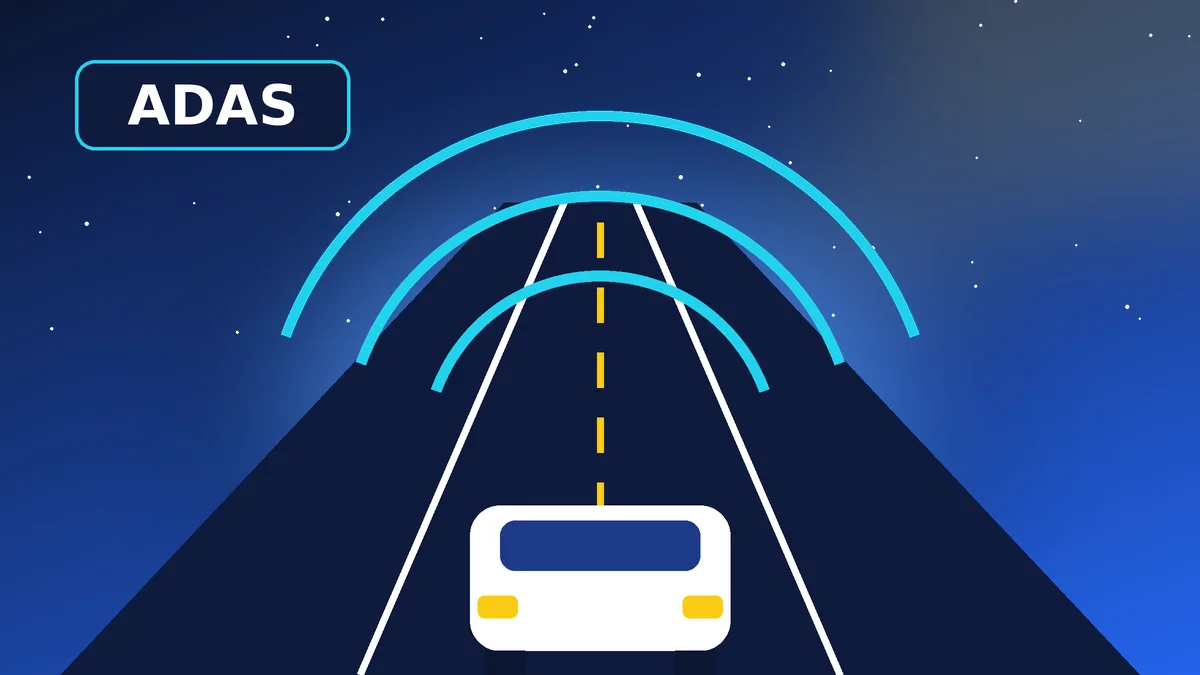
ADAS stands for Advanced Driver Assistance Systems. It’s a group of safety and convenience features that use sensors to watch the road around your car.
Most systems combine a front camera, usually behind the windscreen near the rear-view mirror, with radar sensors in the front bumper and sometimes the rear corners. Together, they detect vehicles, pedestrians and lane markings, then warn you or step in if something goes wrong.
ADAS Levels Explained: Level 0 to Level 5
Driving automation is commonly described using six levels set out by SAE International, a global engineering body:
| Level | What it means | Who’s in control |
|---|---|---|
| Level 0 | Warnings only, such as a beep for a car in your blind spot | You |
| Level 1 | One assist at a time, such as adaptive cruise control or lane keeping | You |
| Level 2 | Steering and speed assisted together, such as adaptive cruise with lane centring | You, hands on and eyes on the road |
| Level 3 | The car drives itself in limited conditions; you take over when asked | Shared |
| Level 4 | Fully self-driving in defined areas | The car |
| Level 5 | Fully self-driving everywhere | The car |
When a car in India advertises Level 2 ADAS, it is still a driver-assistance system, not a self-driving car. You must keep your hands on the wheel and your eyes on the road.
7 Common ADAS Features and What They Do
1. Automatic Emergency Braking (AEB)
Detects a likely collision with a vehicle or pedestrian ahead, warns you, and applies the brakes if you don’t react. This is the single most important safety feature.
2. Forward Collision Warning (FCW)
Sounds an alert when you’re closing in on the vehicle ahead too quickly.
3. Adaptive Cruise Control (ACC)
Keeps a set speed and automatically maintains a safe gap to the car ahead. Some versions with stop-and-go can slow to a halt in traffic and move off again.
4. Lane Departure Warning and Lane Keep Assist
Warns you if you drift out of your lane without indicating, and lane keep assist gently steers you back.
5. Blind Spot Monitoring
Lights up a warning on the mirror when a vehicle is in your blind spot. Very handy with two-wheelers weaving through traffic.
6. Rear Cross Traffic Alert
Warns you about vehicles approaching from the side while you reverse out of a parking spot.
7. High Beam Assist
Switches between high and low beam automatically when it detects oncoming traffic.
How Well Does ADAS Work on Indian Roads?
These systems were developed largely for roads with clear markings and predictable traffic. Indian conditions are tougher, so expect mixed results:
- Lane features struggle when markings are faded, missing or covered in dust.
- Adaptive cruise can brake suddenly when a two-wheeler or auto-rickshaw cuts in.
- Emergency braking may react to objects that aren’t real threats, or miss animals and unusual obstacles.
- Rain, fog, dust and dirt on the camera or radar can switch features off temporarily.
That said, they work best on well-marked highways and expressways, where adaptive cruise and lane assist can reduce fatigue on long drives. In dense city traffic, many owners switch off lane assist and keep only the warnings.
Is ADAS Worth Paying Extra For?
Often, these features are only available on the top variants, so the real cost is the price jump between variants. Ask yourself:
- Do you drive on highways often? Adaptive cruise and lane assist are most useful there.
- Is AEB included? Emergency braking is the feature most likely to prevent a crash.
- Do you want the other top-variant features anyway? If yes, the safety tech is a bonus.
- Have you tested it? Ask for a test drive on a highway with the features switched on.
Choosing between fuel types too? Read our guide on petrol vs CNG vs hybrid vs EV.
Tips for Using ADAS Safely
- Never treat it as autopilot. Keep your hands on the wheel and stay alert.
- Keep sensors clean. Wipe the windscreen area in front of the camera and the radar on the bumper.
- Learn the settings. Adjust warning sensitivity and following distance to suit your driving.
- Get the camera recalibrated after a windscreen replacement or front-end repair.
- Check the owner’s manual for the conditions in which each feature works.
A dashcam is a useful addition to any car. See our list of car gadgets worth buying.
Aadyanix Verdict: Helpful, Not Hands-Free
ADAS makes driving safer when you understand it. Automatic emergency braking and blind-spot monitoring can prevent accidents, and adaptive cruise makes highway drives far less tiring.
But Indian roads test these systems hard. Treat it as a second pair of eyes, not a replacement for your own, and test it properly before paying extra for it.
ADAS: Frequently Asked Questions
What is the full form of ADAS?
It stands for Advanced Driver Assistance Systems.
Can a car with ADAS drive itself in India?
No. Cars sold in India offer driver-assistance features up to Level 2. You must keep your hands on the wheel and stay in control.
Can I turn ADAS off?
Usually, yes. Most cars let you switch off or adjust individual features, such as lane keep assist, from the settings menu.
Does ADAS work at night and in rain?
It works at night with reduced effectiveness, and heavy rain, fog or dirt on the sensors can disable some features temporarily.
Does ADAS affect car insurance?
Repairs can cost more because sensors and cameras may need replacing or recalibrating. Check with your insurer before buying.
Have a question about driver-assistance tech? Get in touch and I’ll be happy to help.