
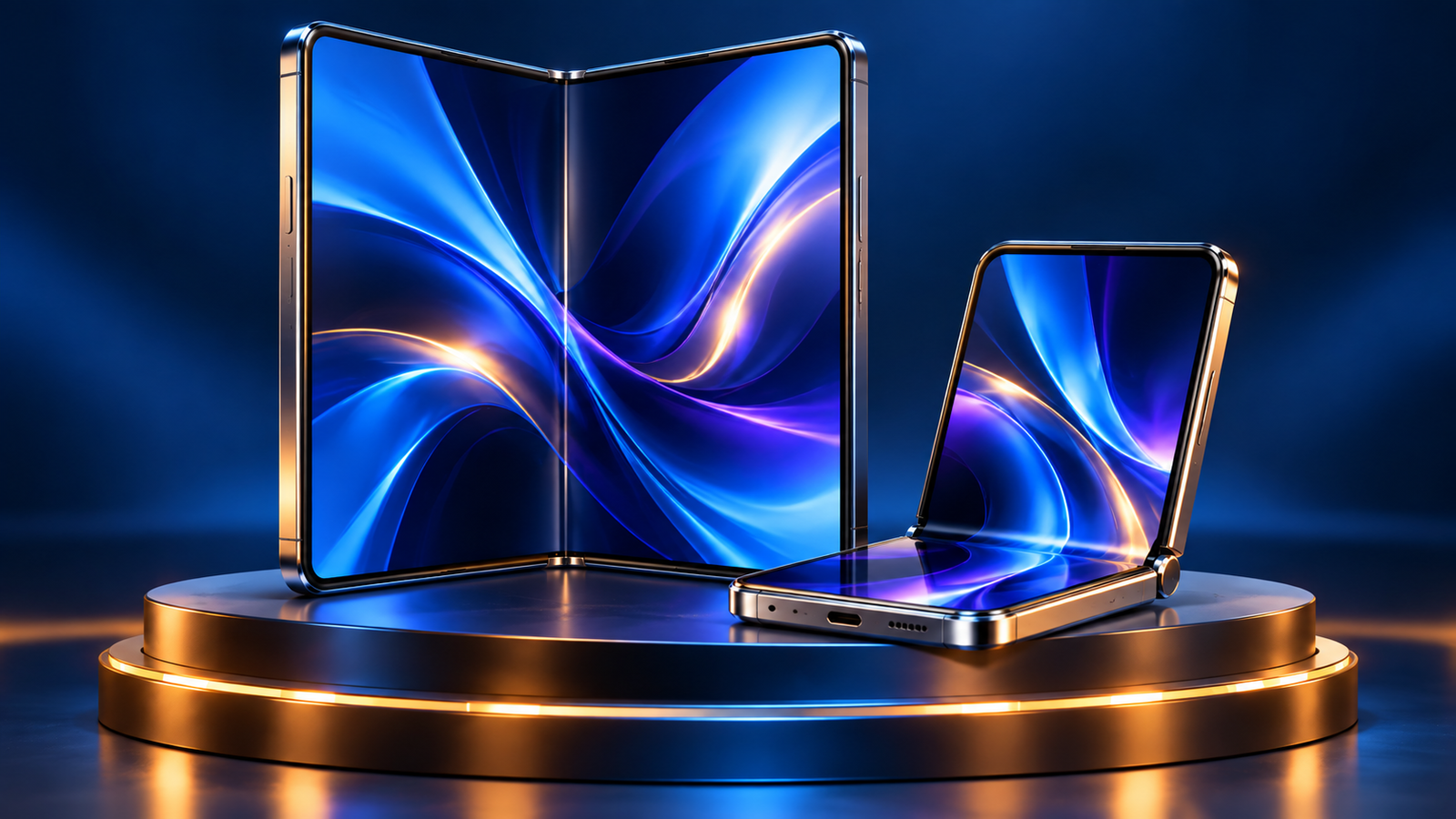
For years, foldable phones felt like expensive experiments: impressive in a showroom, but hard to justify for everyday use.
2026 is changing that conversation.
Apple has announced its first foldable, the iPhone Duo, and in India the Vivo X Fold 6 is tipped to launch in early October. With Samsung, Motorola, Vivo, OPPO and others already selling foldables, more buyers are asking a simple question:
Are foldable phones actually worth buying now, or are they still a luxury gamble?
Here’s an honest look at what foldable phones do well, where they still fall short and who should, and shouldn’t, buy one.
Quick Take
Foldable phones are worth buying in 2026 if you’ll genuinely use the bigger screen or compact design and are comfortable paying a premium.
- Book-style foldables are great for reading, multitasking and work on the go
- Flip-style foldables are about a compact, pocketable design
- They cost more, are harder to repair and usually have weaker water and dust protection than regular phones
- A visible crease and extra weight are still normal
If you mainly want the best camera, battery and durability for your money, a regular flagship is still the safer choice.
Table of Contents
What Are Foldable Phones?
Foldable phones use a flexible display and a hinge so the screen can fold in half. There are two main types.
Book-style foldables
These open like a book. Closed, they work like a normal phone with an outer screen. Open, they reveal a large, almost tablet-sized inner display.
Examples include Samsung’s Galaxy Z Fold series, the Vivo X Fold series and Apple’s new iPhone Duo.
Flip-style foldables
These fold vertically, like old flip phones. Open, they’re a regular-sized smartphone; closed, they shrink to a small square that fits easily in a pocket or bag.
Examples include Samsung’s Galaxy Z Flip series and Motorola’s Razr series.
Why Foldable Phones Are Making Headlines in 2026
The biggest news is Apple’s entry. On September 9, 2026, Apple unveiled the iPhone Duo, a book-style foldable with:
- A 7.6-inch inner display and a 5.4-inch outer display
- A custom nanotexture finish designed to hide the crease and reduce glare
- A grade 5 aluminium build and a hinge with over 100 special components
- A starting price of $1,999 (256GB) in the US, with preorders from October 16 and launch on October 23, 2026
Indian pricing hadn’t been announced at the time of writing.
Closer to home, the Vivo X Fold 6 has been tipped for an Indian launch around October 6, 2026.
When Apple enters a category, it usually signals that the technology has matured. It also tends to push rivals to improve their own foldable phones and, eventually, bring prices down.
The Real Advantages of Foldable Phones
- A much bigger screen in your pocket: book-style foldables are excellent for reading, videos, documents and maps
- Genuine multitasking: run two or three apps side by side, such as email and a calendar, or a video call and notes
- Compact design: flip phones are far smaller when closed than any regular smartphone
- Flexible camera use: half-folded, the phone can stand on its own for hands-free video calls, time-lapses or group photos
- Fewer devices: for some people, a book-style foldable can replace a small tablet
The Downsides You Should Know
1. They’re expensive
Foldable phones cost significantly more than regular phones with similar processors and cameras. Much of what you pay for is the flexible display and hinge.
2. The crease is still there
Most foldables still show a visible crease in the middle of the inner screen, especially at an angle or in bright light. Manufacturers keep reducing it, and Apple claims its finish hides it, but it’s something to check in person.
3. Durability and water resistance
Hinges and flexible screens have improved a lot, but foldables are still more delicate than regular phones. Many offer weaker dust protection than standard flagships, and the soft inner screen scratches more easily.
4. Repairs are costly
Replacing a foldable’s inner display can cost a large share of the phone’s price. Check the warranty and whether the brand offers screen-damage protection or an extended care plan.
5. Weight and battery
Book-style foldables are usually heavier and thicker than regular phones. Flip phones are light, but their smaller bodies often mean smaller batteries. Our guide on how to make your phone battery last longer helps either way.
6. Resale value
Foldable phones have historically lost value faster than regular flagships, partly because buyers worry about screen and hinge wear on used devices.
Book-Style vs Flip-Style: Which Suits You?
- Choose a book-style foldable if you read a lot, work on the go, multitask heavily or want to replace a small tablet
- Choose a flip-style foldable if you want a compact phone that’s easy to carry and like the style
- Choose a regular phone if value, camera quality, battery life and durability matter most
Flip-style foldable phones are usually cheaper than book-style models, making them the easier entry point.
Who Should Buy a Foldable Phone?
A foldable makes sense if you:
- Regularly read, edit documents or watch videos on your phone
- Want a bigger screen without carrying a tablet
- Are comfortable paying a premium for new technology
- Look after your devices carefully and use a case
You should probably skip foldables if you:
- Want the best value for money
- Often drop your phone or work in dusty or wet environments
- Keep phones for five years or more and want maximum durability
- Mainly care about camera quality or battery life
Not sure how much to spend? Our guide on how much to spend on a smartphone breaks down what you get at each price level.
Tips Before You Buy a Foldable Phone
- Try it in a store first: check the crease, the weight and how the hinge feels
- Check the water and dust rating (IP rating) and compare it with regular phones
- Read the warranty carefully, especially what’s covered for the inner screen and hinge
- Consider a screen-damage protection plan, given repair costs
- Check the software update policy, so the phone stays secure for years
- Budget for a good case designed for foldables
- Wait for the first reviews of new models such as the iPhone Duo before preordering
For a wider checklist, see what to consider before buying your next smartphone, and our guide to tech accessories worth buying for cases and chargers.
Aadyanix Verdict: Are Foldable Phones Worth It?
Foldable phones are no longer just experiments. In 2026, they’re polished, practical devices, and Apple’s entry makes them more mainstream than ever.
They’re worth buying if the extra screen or compact design will genuinely change how you use your phone, and you’re comfortable with the premium price and extra care they need.
For everyone else, a regular flagship or a strong mid-range phone still offers better value, durability and battery life.
Our advice: if you’re curious, try one in a store, wait for independent reviews of the newest models, and buy only if the foldable feature is something you’ll use every day.
Foldable Phones: Frequently Asked Questions
Are foldable phones durable enough for daily use?
Yes, modern foldables are built for daily use, and hinges are tested for many folds. But they’re still more delicate than regular phones, especially the inner screen and dust protection.
Does the crease go away over time?
No, the crease is part of the folding design. It’s usually less noticeable when you look straight at the screen, and newer models make it harder to see.
Are flip phones cheaper than book-style foldables?
Usually, yes. Flip-style foldables are generally less expensive than book-style models, which have larger inner displays.
Can I use a screen protector on a foldable phone?
Most foldables come with a factory-fitted protector on the inner screen. Don’t remove it, and replace it only through an authorised service centre.
Should I buy the iPhone Duo?
It could be a strong choice for iPhone users who want a bigger screen, but it’s a first-generation product at a premium price. Waiting for independent reviews and Indian pricing is sensible.